




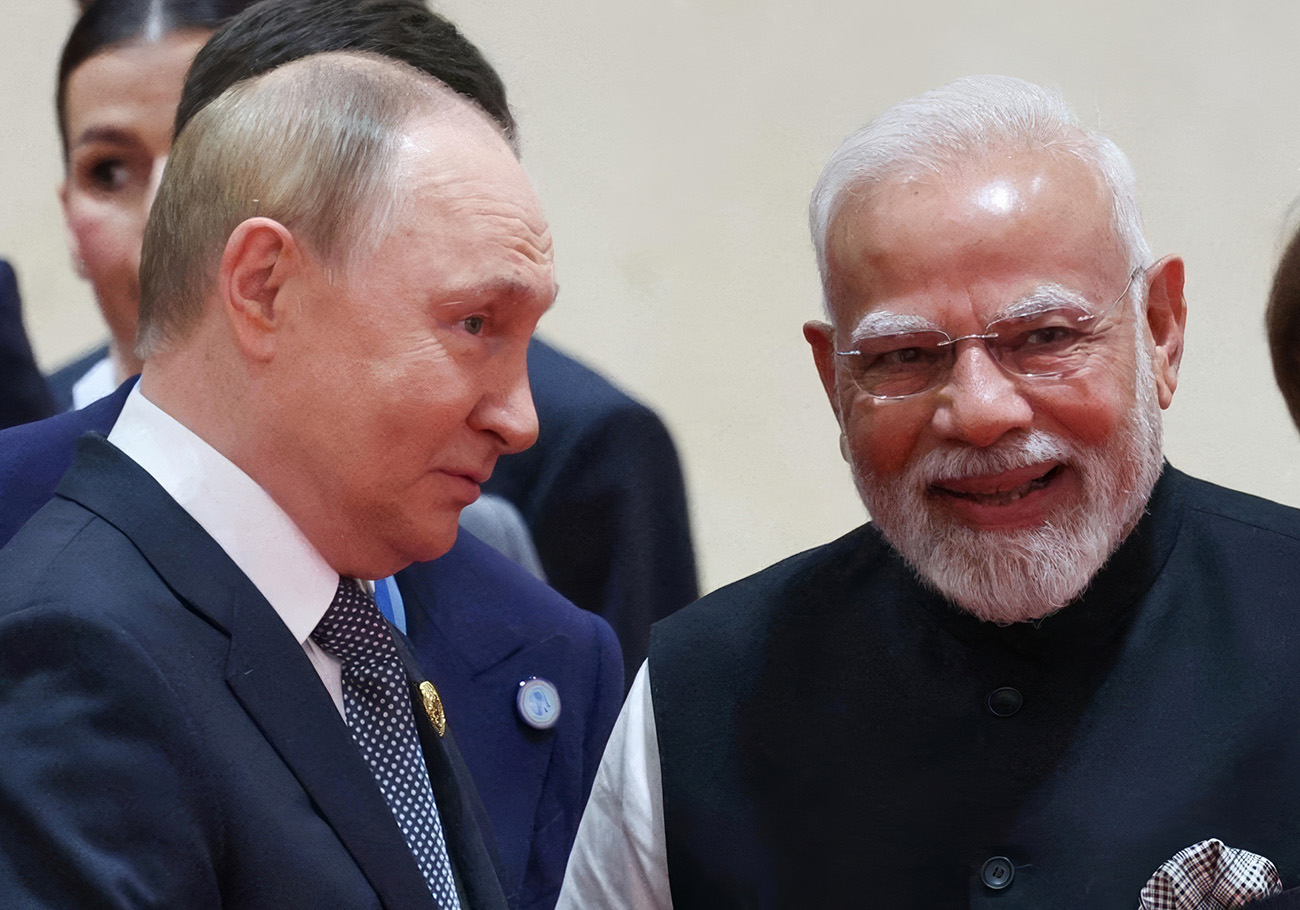
When Prime Minister Narendra Modi greeted Russian President Vladimir Putin with his familiar embrace at Palam airport on Thursday (December 4, 2025), the message was clear: India’s partnership with Russia remains steady despite Western unease, the International Criminal Court warrant, and ongoing U.S. and European sanctions.
However, as both leaders hold formal talks on Friday (December 5, 2025), the Indian government faces a delicate balancing act—especially between Moscow and European capitals—on several sensitive fronts including energy, trade, defence cooperation, nuclear development, and labour mobility.
The symbolism of the visit stands out given the diplomatic calendar ahead: a U.S. trade team will arrive later this month, German Chancellor Friedrich Merz is due in early January, and European leaders Ursula Von Der Leyen and Antonio Costa will be India’s Republic Day and EU-India summit guests. New Delhi aims to conclude both the EU-India and U.S.-India free trade agreements in the coming weeks and hopes announcements on Friday (December 5, 2025) won’t disrupt this momentum.
Energy cooperation remains the most contentious issue. India’s purchases of Russian crude surged from under 2% of its import mix before the Ukraine conflict to 40% last year, sending bilateral trade soaring from a decade-long average of $10 billion to $68.7 billion in 2024-25.
With Washington’s sanctions compelling India to scale back those oil imports, both governments will explore ways to substitute part of the oil trade with other Russian commodities and increase Indian exports of agricultural goods, textiles, processed foods, and machinery—using the new Eastern Maritime Corridor connecting Chennai and Vladivostok.
Talks will also focus on advancing the proposed Free Trade Agreement between India and the Eurasian Economic Union (EAEU), as Indian exporters, facing steep 50% U.S. tariffs, look for alternative markets.
The India-Russia labour mobility pact, expected to be announced as the highlight of Putin’s visit, could create vital opportunities for Indian workers just as Western countries impose stricter immigration rules.
Meanwhile, Russia—under strain from sanctions and workforce shortages—is projected to face a gap of around 3.1 million workers by the end of the decade and hopes to attract Indian talent for its construction, engineering, and manufacturing sectors.
Observers will be watching closely for defence developments, especially after Washington previously threatened penalties under the Countering America’s Adversaries Through Sanctions Act (CAATSA) over India’s purchase of S-400 air defence systems. Technology transfer from Moscow remains vital to India, as no other partner has yet agreed to share comparable strategic systems.
With the Russian Duma approving the RELOS military logistics pact, expanded joint exercises—earlier criticised by the EU—may now follow.
In the nuclear field, India’s Ministry of Atomic Energy recently confirmed discussions with Russia’s state-owned Rosatom for collaboration on five upcoming indigenous small modular reactor projects, even as France and other EU nations also compete for involvement.
