





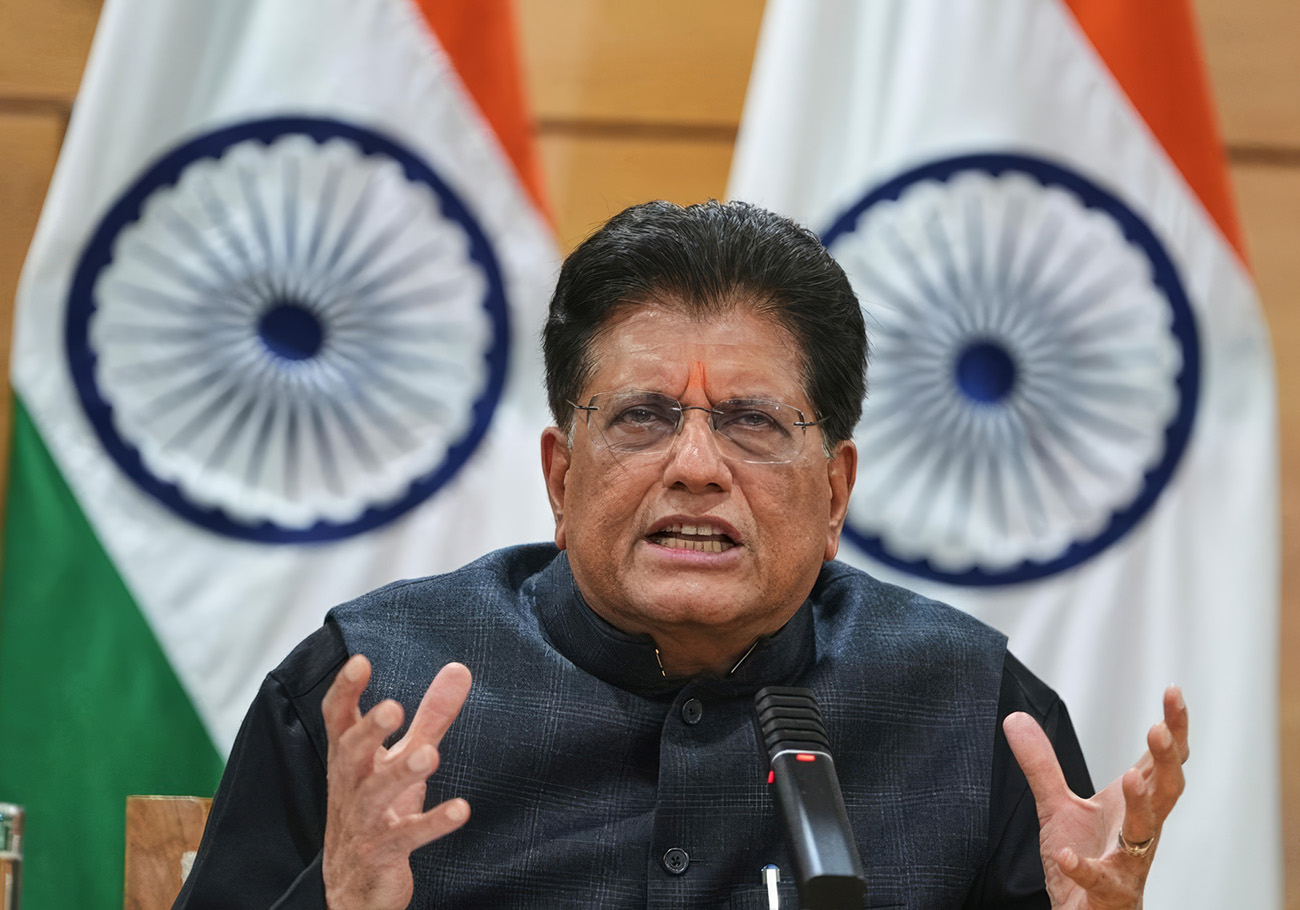
Commerce Minister Piyush Goyal stated Tuesday (February 3, 2026) that the U.S. trade deal, revealed late Monday (February 2, 2026) via social media posts by U.S. President Donald Trump and Indian Prime Minister Narendra Modi, will spare sensitive agricultural products and dairy items. He noted full details would emerge "soon."
The agreement sees the U.S. cutting its 25% "reciprocal" tariffs on India to 18% and scrapping the extra 25% "penalty" tariffs linked to India's Russian oil imports.
"This India-U.S. trade pact outshines those with our neighbors and rivals," Goyal declared at a press briefing. "Prime Minister Modi has steadfastly shielded agriculture and dairy, never yielding their interests. The U.S. deal likewise protects these vital Indian sectors," he added.
Goyal offered no further insights into India's concessions. He also sidestepped Trump's remarks about India halting Russian oil buys, ramping up Venezuelan oil imports, and boosting overall U.S. purchases.
Goyal criticized Lok Sabha Opposition Leader Rahul Gandhi, Congress, and allies, blaming their Monday (February 3, 2026) parliamentary disruptions for forcing him to brief via press conference instead.
"We normally would have addressed this in Parliament," he said. "But as everyone witnessed, the opposition—led by Rahul Gandhi's Congress, plus DMK, Trinamool Congress, and SP—stormed the Speaker’s dais and disrespected him, leaving us no choice but to speak here."
Goyal indicated the pact remains in "final detailing" by both nations' teams.
"Once the agreement is signed, the joint statement finalized, and technical steps cleared, we'll release all details," he assured.
In an unusual candid remark, Goyal admitted U.S. tariffs had hit multiple sectors hard.
"Our farmers and exporters suffered under the 50% tariffs," he noted, explaining, "Marine exporters struggled, and textiles needed tariff relief. This deal safeguards every Indian's interests, unlocks vast opportunities nationwide, and shields sensitive areas like agriculture and dairy." He highlighted gains for labor-intensive exports including textiles, apparel, plastics, home decor, leather and footwear, gems and jewelry, organic chemicals, rubber products, machinery, and aircraft parts.
Goyal addressed opposition queries on why Trump announced first. "The U.S. set the reciprocal tariffs and had to lower them to 18%, so the news naturally broke from their side," he clarified.
Trump's Truth Social post included claims that Modi agreed India would purchase "over $500 billion dollars [sic] worth of U.S. energy, technology, agricultural, coal, and many other products."
Indian government sources clarified the $500 billion in buys would unfold over five years post-deal, signaling India's commitment to importing data center gear, expanding civil nuclear ties, and ramping up advanced AI chip imports.
