





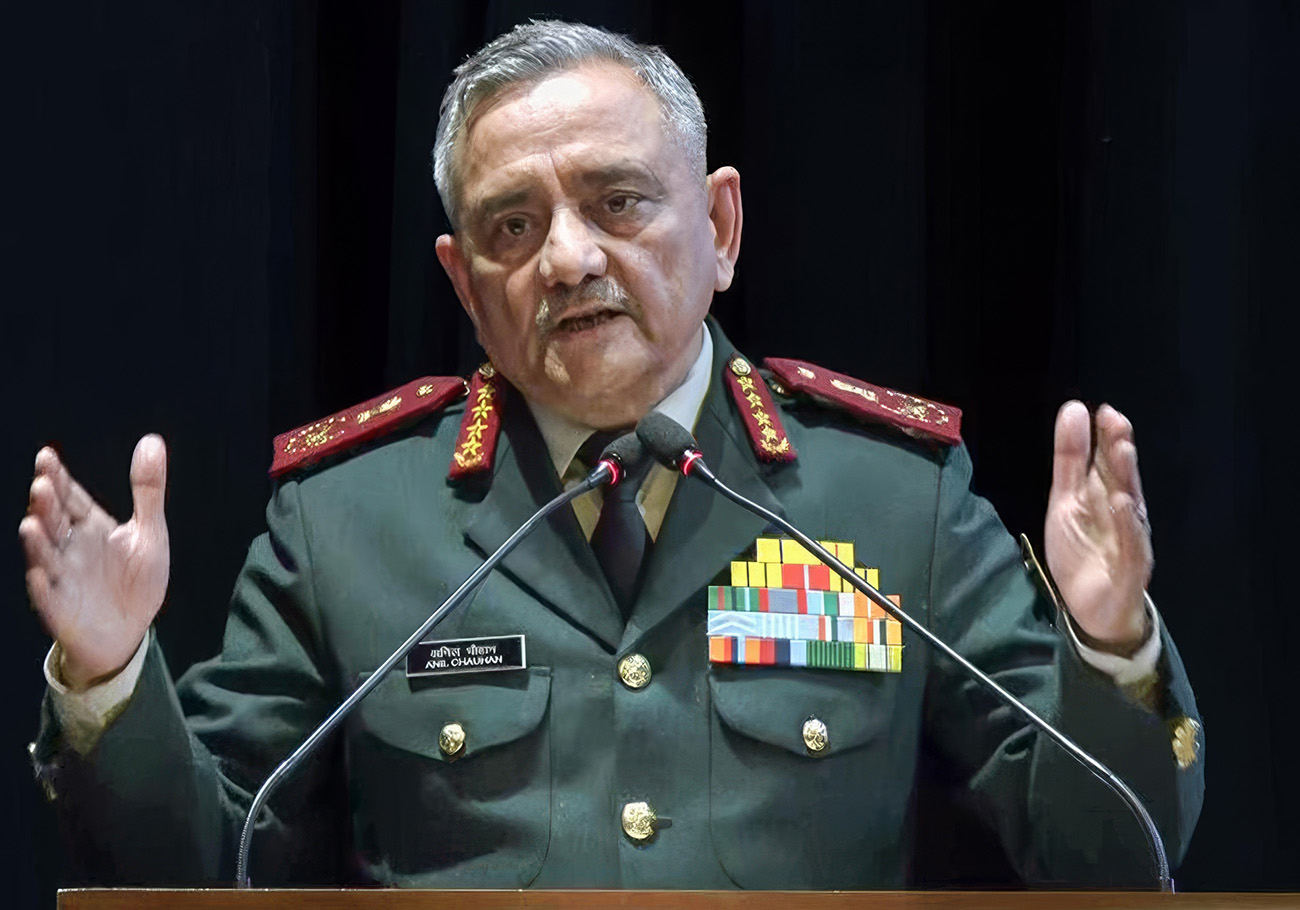
Chief of Defence Staff (CDS) General Anil Chauhan stated on Friday (February 13, 2026) that post-independence India sought strong ties with China and took the lead in defining its borders.
“[Jawaharlal] Nehru likely recognized the McMahon Line in the east and some claims in Ladakh, though boundaries remained vague. That's why he pursued the Panchsheel Agreement... probably,” General Chauhan explained.
“The Chinese, after 'liberating' Tibet and advancing into Lhasa and Xinjiang, viewed this remote region as critical from both sides. They sought stability here, making it a priority,” the CDS continued.
Once China took control of Tibet, he noted, “India relinquished its special rights. We acknowledged China and backed its UN Security Council seat. The Himalayan buffer with Tibet vanished, turning into a direct frontier.”
In 1954, India accepted Tibet as Chinese territory, leading to the Panchsheel pact. This led India to believe its northern border was settled, with only this agreement addressing unresolved areas from New Delhi's view, General Chauhan said.
He pointed out that India saw added validity in naming six passes for trade and pilgrimage—Shipki La, Mana, Niti, Kungri Bingri, Darma, and Lipulekh. “But China maintained the deal covered only trade, not their border claims,” he added.
The CDS emphasized the rising strategic role of Himalayan frontiers, praising the government's targeted infrastructure work in these areas and calling for comprehensive, proactive strategies.
General Chauhan spoke on ‘Frontiers, Borders and LAC: The Middle Sector’ at the launch of Bharat Himalayan International Strategic Manch (BHISM), a Dehradun-based think tank. He highlighted the need for a unified approach to challenges like climate change, water security, border control, military upgrades, and disaster readiness in the Himalayas.
Retired Lieutenant General Ajay Kumar Singh, involved with BHISM, described the initiative's goals: delivering evidence-based policy advice to India's government on Himalayan strategic matters, while building ties with local academic and research bodies in Dehradun.
